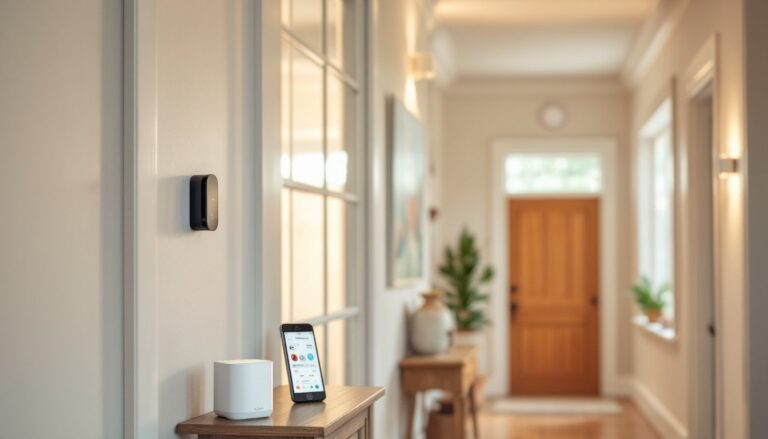
Alarm window sensors are the unsung heroes of home security, silent sentries that stand guard over entry points day and night. If you’re serious about protecting your home, understanding how these devices work and why they matter is the first step toward real peace of mind. Whether you’re upgrading an existing system or building one from scratch, window sensors form the backbone of effective perimeter defense. This guide walks you through everything a homeowner needs to know: how they function, what types exist, how to install them yourself, and how to keep them running reliably.
Table of Contents
ToggleKey Takeaways
- Alarm window sensors use magnetic contact detection to instantly alert you when a protected window opens or closes, providing the foundation of home perimeter defense.
- Wired magnetic sensors are more reliable with no battery maintenance, while wireless versions offer easier installation but require battery replacement every 2–3 years.
- Glass break detectors complement magnetic sensors by detecting forced entry through breaking glass, making them ideal for high-risk or difficult-to-fit windows like skylights and decorative panes.
- Proper installation and alignment within 1 inch between magnet and sensor is critical; monthly testing and quarterly cleaning prevent false alarms and maintain system reliability.
- Ground-floor windows and main entry routes should have magnetic contact sensors on every pane, while secondary or high-story windows can use selective coverage based on your security priorities.
- Quality sensors from reputable manufacturers cost $150–$300 for a typical home and significantly outlast cheap alternatives, making them a worthwhile investment in long-term home security.
What Are Alarm Window Sensors and How Do They Work
Window sensors detect when a window opens or closes. They’re typically wired or wireless devices that sit in your alarm system’s perimeter defense layer, meaning they trigger an alert when a protected window breaks that boundary. The most common type is the magnetic contact sensor, which works like a simple switch: when the magnet moves away from the sensor (door or window opening), the circuit breaks and sends a signal to your control panel.
Think of it this way: you’re sitting downstairs watching TV with the system armed, and someone tries to slide open an upstairs bedroom window. The sensor detects that movement instantly and alerts you before the intruder gains entry. That’s the real value. The signal travels to your panel, either through hardwired connections or wireless radio frequency, where it registers as a breach. Most modern systems log the time and location of every trigger, giving you a detailed record of activity.
The speed of detection is important. Quality sensors respond in milliseconds, which means there’s virtually no lag between window movement and alarm activation. This is why placement and proper installation matter so much: a poorly mounted sensor or one blocked by paint or dirt won’t respond reliably. Understanding this foundation helps explain why maintenance isn’t optional, it’s part of keeping your system functional.
Types of Window Sensors for Home Security Systems
Magnetic Contact Sensors
Magnetic contact sensors are the workhorse of home security. They consist of two small components: a sensor unit and a magnet. The magnet is typically mounted on the moving part of the window (the sash), while the sensor attaches to the frame. When the window is closed, the magnet keeps the sensor’s internal switch in a “closed” position. Open the window and the magnet moves away, the switch opens, and the alarm panel knows something’s up.
These sensors come in wired and wireless versions. Wired sensors require running low-voltage cable to your control panel, more labor-intensive to install but extremely reliable with no batteries to replace. Wireless versions use battery-powered transmitters that send a radio signal to your panel: they’re easier to retrofit but require periodic battery replacement (typically every 2–3 years depending on model and activity).
The accuracy is excellent as long as the gap between magnet and sensor stays within tolerance, usually about 1 inch. Installation is straightforward: surface-mounted units simply screw to the frame and sash, while recessed versions require chiseling a cavity (called a mortise) into the wood or trim to hide the components.
Glass Break Detectors
Glass break detectors are a different animal altogether. Instead of detecting window opening, they listen for the acoustic signature of breaking glass, the sharp, high-frequency sound that occurs when tempered window glass fractures. These sensors are typically mounted inside the room near the window and use a small microphone and processing circuit to identify that specific sound.
The advantage: they protect windows you can’t easily fit magnetic sensors to (skylights, stained glass, decorative panes) and detect forced entry through breaking rather than opening. But, they’re less reliable in noisy environments, a loud crash in the kitchen or a child dropping a plate can cause false alarms. False alarms are a real problem in many jurisdictions, where repeated unnecessary dispatch triggers fines or system suspension.
Most modern glass break detectors combine acoustic detection with vibration sensing (using a piezo sensor) to reduce false positives. This dual-detection approach gives them a better hit rate on actual glass breaks while ignoring incidental noise. They’re wireless by necessity since there’s no window movement to detect. Glass break sensors work best as supplementary protection on high-value windows or difficult-to-fit openings, not as your primary perimeter defense. In a basic home alarm system, magnetic sensors typically provide the foundation while glass break detectors add a second layer.
Installing Window Sensors: A DIY Guide for Homeowners
Installation depends on which type you’re working with, but both are well within reach for a homeowner with basic tools and patience.
For magnetic contact sensors:
-
Measure and mark. Use a pencil to mark where the magnet and sensor will go. For surface-mounted units, this is straightforward, mark the frame and sash centerline about 1 inch from the top of the window. Check that the magnet will be within 1 inch of the sensor when the window is closed.
-
Drill pilot holes (if needed) and secure the sensor to the frame using #6 or #8 wood screws, don’t overtighten or you’ll crack the plastic housing. The sensor usually mounts vertically on the frame.
-
Mount the magnet on the moving sash at the corresponding height. Make sure it aligns with the sensor.
-
Test the gap by opening and closing the window several times. The magnet should move smoothly away from the sensor without binding.
-
For wired sensors, run low-voltage cable (typically 18-gauge or 20-gauge shielded alarm cable) from the sensor to your control panel or wiring hub. Keep runs away from electrical lines to avoid interference. Secure cable with clips every 16 inches.
-
Program the sensor in your control panel’s software, assigning it to a zone (like “Master Bedroom Window”) so alerts are clear.
For glass break detectors:
-
Mount near the window inside the room, typically on a wall or windowsill, 1–3 feet from the glass.
-
Follow manufacturer placement guidelines, most specify distance and orientation for best acoustic pickup.
-
Test sensitivity settings if the model allows adjustment. You’re balancing detection capability against false alarms.
-
Battery installation is straightforward, usually two AA batteries that last 2–3 years.
General tips: Before you drill, shut off power to any nearby electrical outlets. Wear safety glasses when drilling. Test every sensor after installation and confirm it triggers an alert on your panel. One mistake homeowners often make is drilling through wall studs or hitting hidden wiring, use a stud finder to locate solid backing first, and if you’re near electrical outlets, call an electrician for advice.
If your windows are particularly large, older, or oddly shaped, consider consulting your alarm company or a pro installer. Some windows (sliding, double-hung, casement) have quirks that affect sensor placement and reliability.
Choosing the Right Sensors for Your Home
Selection starts with understanding your security priorities. High-risk entry points, ground-floor windows, bedroom windows, windows facing alleys or dark areas, deserve magnetic contact sensors on every single pane. These are your first line of defense.
Lower-risk areas (second-story windows, interior room windows facing your yard) can sometimes skip sensors, but don’t assume any window is truly secure without one. A determined intruder will try multiple entries, and you want coverage at each point.
Consider your system type next. If you already have a wired basic home alarm system installed, wired magnetic sensors integrate seamlessly and cost less per unit. Adding them means running more low-voltage cable, manageable if you’re comfortable fishing cable through walls or running it along baseboards.
If you’re upgrading a wireless system or adding to an existing one, wireless sensors offer flexibility. You can mount them without cable runs, which saves installation time and looks cleaner. Trade-off: you’re managing batteries across multiple devices, and wireless signals occasionally drop or conflict in homes with heavy interference (older homes with plaster walls, metal framing, or proximity to radio towers can cause problems).
Glass break detectors make sense on windows you can’t easily fit a magnetic sensor to, or as a supplement on high-value windows (ground-floor rooms with expensive electronics or jewelry, for example). They’re not replacements for magnetic sensors, though, they’re secondary protection.
Budget matters, but don’t cheap out on core components. A $15 magnetic sensor from a reputable manufacturer (Honeywell, Bosch, 2GIG, or similar) will outlast a $5 knockoff that fails after two years. Quality sensors have better materials, reliable switching mechanisms, and longer warranties. For a typical home with 10–15 windows, expect to spend $150–$300 on sensors alone (not counting professional installation).
A smart alarm system may offer integration with your smartphone or app-based monitoring, which some homeowners value highly. That’s a personal choice, but don’t let smart features distract from core function, a sensor that works reliably matters more than one that has flashy notifications.
Maintenance and Troubleshooting Tips
Window sensors are low-maintenance devices, but neglect catches up with you fast.
Monthly: Open and close each protected window and confirm your control panel registers the change. If it doesn’t, the sensor may be dirty, misaligned, or failing. Check that the magnet and sensor are still properly aligned, vibration or wind can shift them over time, especially on loose-fitting windows.
Quarterly: Wipe sensor and magnet surfaces with a dry cloth. Dust and dirt reduce sensitivity: if a sensor stops responding reliably, dirt is often the culprit. For window frames with paint buildup, a gentle scrape with a plastic scraper clears grime without damaging the housing.
Wireless sensor batteries: Replace annually or when your panel shows a low-battery warning. Don’t wait until they’re dead, a dead sensor is a blind spot in your system. Buy fresh batteries (typically AA or CR2032 depending on model) and replace all in the same sensor at once.
Wired sensor checks: Test by disconnecting the sensor at the terminal block and confirming the panel shows a fault or open circuit. This tells you the wiring is intact. If the panel doesn’t respond, you may have a broken wire or loose connection. Trace the cable and check all terminal connections.
Common problems:
-
Sensor not triggering: Check magnet/sensor alignment first (they should be within 1 inch). Clean both surfaces. If wired, check cable continuity with a multimeter. If wireless, replace batteries and reprogram the sensor.
-
Repeated false alarms: Windows settling or shifting can knock sensors out of alignment. Loosen mounting screws slightly so the sensor floats a bit, reposition, and retighten. On glass break detectors, lower sensitivity settings or relocate the sensor away from high-noise areas (kitchens, near stereos).
-
Intermittent triggering: Usually indicates loose wiring, a loose magnet, or a battery running low. Check wired connections first: if wireless, test with new batteries.
When to call a pro: If you’ve cleaned, checked alignment, and replaced batteries but the sensor still doesn’t work, it’s likely a hardware failure. Contact your alarm company, they’ll replace the sensor, usually at a service call fee or under warranty. Don’t ignore a faulty sensor thinking “we’ll just rely on the other ones”, every gap in coverage is a security risk.
Regular users of home alarm repair services often report that a 15-minute monthly walk-through catches 90% of issues before they become problems. It’s simple: test each sensor, look at the panel’s activity log, and note anything unusual. According to Digital Trends, the most common reason home security systems fail is lack of basic maintenance, not faulty equipment. You’re protecting an investment in your safety, spend the time.
Final Thoughts: Securing Your Home with Confidence
Alarm window sensors are straightforward technology with outsized importance in home security. Whether you’re installing them yourself or having a professional handle it, the key is ensuring every critical entry point is covered and every sensor is functioning reliably. Start with magnetic contact sensors on ground-floor windows and main entry routes, add glass break protection if budget allows, and commit to monthly testing and maintenance. A properly configured sensor system doesn’t just deter intruders, it gives you genuine peace of mind, knowing your home is actively protected. If you’re building a complete security strategy, explore home alarm archives for guides on control panels, monitoring services, and system integration across your whole home.