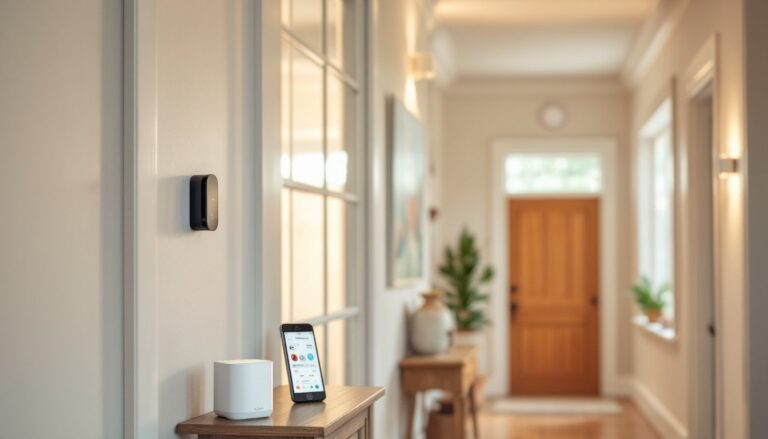
A perimeter alarm system is your home’s first line of defense, the difference between an alert the moment someone approaches and a break-in you only discover after the fact. Unlike whole-house systems that monitor every room, a perimeter alarm focuses on entry points: doors, windows, gates, and the boundary itself. It’s less about what happens inside and more about stopping trouble before it enters. For homeowners serious about security without overcomplicating things, understanding how these systems work and what sensors fit your layout is worth the effort. In 2026, perimeter security has become affordable, easier to install, and smarter than ever.
Table of Contents
ToggleKey Takeaways
- A perimeter alarm system protects entry points like doors and windows with sensors, control panels, and alerts, offering early detection before intruders breach your home.
- Magnetic door/window sensors ($10–$25 each) are reliable and affordable, but glass break sensors ($50–$100) and motion detectors provide additional protection for gaps in coverage.
- Perimeter alarm systems cost $300–$1,000 upfront for DIY installation and can qualify you for insurance discounts of 5–15%, often paying for themselves within two years.
- Hybrid systems combining hardwired and wireless components offer the best flexibility, allowing you to start with basic entry-point sensors and expand with motion, glass break, or smart home integration as needed.
- Professional monitoring services ($10–$40/month) dispatch emergency services automatically, while local-only systems are suitable for homeowners who are home most of the time.
- A visible perimeter alarm system deters casual burglars through signage and sensor visibility, making your home a less attractive target and redirecting criminal attention elsewhere.
What Is A Perimeter Alarm System And How Does It Work?
A perimeter alarm system protects the outer boundary of your property by detecting unauthorized entry attempts. Think of it as a digital fence that alerts you the moment someone crosses it. The system consists of three basic components: sensors at entry points, a control panel that receives signals, and an alert mechanism, usually a siren, smartphone notification, or both.
Here’s how it works in practice: a sensor at your front door detects motion or a door opening. That sensor sends a wireless or hardwired signal to your control panel. The panel recognizes the breach and triggers an alarm, loud noise, a call to your phone, or a message to a monitoring service. Some systems let you disable the alarm if it’s a family member: others go straight to notification.
The key advantage is simplicity. You’re not monitoring every closet, every room. You’re focusing resources where break-ins actually happen: the perimeter. This keeps costs down and false alarms minimal. Most modern perimeter systems are hybrid, part hardwired, part wireless, giving you flexibility in placement and easy expansion as your needs change.
Types Of Perimeter Alarm Sensors You Should Know About
Perimeter sensors come in several types, each designed for different entry points and detection methods. Choosing the right mix depends on your home’s layout, the areas you want to protect, and your budget. Most setups combine multiple sensor types to cover doors, windows, and open spaces without gaps.
Magnetic Door And Window Sensors
Magnetic sensors are the workhorses of perimeter security. They consist of two parts: a magnet mounted on the door or window frame, and a switch mounted on the movable part (the door or sash). When the magnet and switch are aligned, the circuit stays closed and the alarm is disarmed. Open the door or window, and the magnet moves away, breaking the circuit and triggering the alert.
These sensors are extremely reliable, affordable ($10–$25 each), and nearly invisible once installed. They work on any door or window, standard hinged doors, sliding glass doors, even roof hatches. No batteries required on hardwired models, though wireless versions do need replacement every 2–5 years. Installation is straightforward: stick one half to the frame, the other to the moving part, and run wire (or wireless signal) to the panel.
The downside? They only detect if something opens. If a thief smashes a window without opening it, a magnetic sensor won’t catch it. That’s where glass break sensors come in.
Motion Detection And Glass Break Sensors
Motion sensors detect movement in a protected zone, usually using passive infrared (PIR) technology. They sense heat from a moving body and trigger an alert if motion occurs when the system is armed. These are excellent for open patios, driveways, or yard areas where you want early warning of approaching intruders.
Keep in mind: PIR sensors have a range (typically 30–40 feet) and work best when aimed at likely approach paths. They’re also prone to false alarms from animals, swaying branches, or sunlight reflecting off windows. If you have pets or a windy lot, you may want to use motion sensors sparingly or pair them with an adjustable sensitivity setting.
Glass break sensors detect the acoustic signature of breaking glass. When glass shatters, it emits a specific sound frequency. A glass break sensor “hears” that frequency and triggers the alarm. These are smart for protecting large windows or glass doors that a burglar might shatter to reach in and unlock a door.
The trade-off: glass break sensors can occasionally false-alarm during thunderstorms or if loud noises mimic breaking glass. They also cost more ($50–$100 per unit compared to $10–$25 for magnetic sensors). Use them on high-value entry points, not every window.
Key Benefits Of Installing A Perimeter Alarm System
Installing a perimeter alarm system delivers real, measurable benefits beyond peace of mind. First is early detection. A perimeter alarm alerts you the moment an intruder approaches, before they’re inside your home. That’s the difference between a break-in you prevent and a burglary you report after the fact.
Second is cost-effectiveness. You’re not buying sensors for every room, every closet, every corner. You’re protecting just the boundary. This keeps the system affordable, often $300–$800 for a basic DIY setup, and means fewer moving parts to maintain. Compared to a full-house system, perimeter-only setups are simpler to install and easier to understand.
Third is insurance discounts. Many insurers offer premium reductions (5–15%) if your home has an armed, monitored alarm system. A $500 system pays for itself in two years if you save $30–$40 per month on homeowner’s insurance. Check with your provider about specific requirements.
Fourth is the deterrent effect. A visible alarm system, particularly one with signage, discourages casual burglars. Most opportunistic thieves move to easier targets. The presence of sensors, cameras, and yard signs signals “this house is protected,” and that alone can redirect criminal attention elsewhere.
Finally, perimeter systems offer flexibility and scalability. Start with door and window sensors at main entry points. Later, add motion sensors to the yard, glass break sensors to high-value windows, or integrate cameras and smart locks. You’re not locked into a single system: most modern platforms allow mixing and matching components as your needs and budget evolve.
Choosing The Right Perimeter Alarm System For Your Home
Selecting a perimeter alarm system requires honest assessment of your home’s vulnerabilities, your technical comfort level, and your budget. Start by identifying your entry points. Walk the perimeter and list every door and window. Count them, this drives sensor costs. A small cottage might need 6–8 sensors: a larger home could need 15–20.
Next, decide between hardwired and wireless. Hardwired systems (wires run through walls to the control panel) are more reliable, require no battery maintenance, and integrate easily with monitoring services. They’re also disruptive to install if your home’s walls are closed up. Wireless systems use radio signals and battery-powered sensors, easier to install, expandable, but require battery checks every 6–12 months. Many modern systems are hybrid: hardwired backbone with wireless sensors added as needed.
Consider monitoring options. Local-only systems sound an alarm in your home and send a notification to your phone, you’re responsible for calling police. Professional monitoring services ($10–$40/month) receive alerts and dispatch emergency services if triggered. If you travel frequently or work long hours away from home, professional monitoring is worth the cost. If you’re home most of the time, local-only may suffice.
DIY installation vs. professional installation: DIY systems (like those from Ring Home Alarm) cost $200–$600 and take an afternoon to install. Professional installation runs $500–$1,500 but ensures everything is wired correctly, coded properly, and integrated with your home’s network. For most homeowners, a basic home alarm system installed yourself is achievable, provided you’re comfortable following instructions and troubleshooting connectivity.
Budget realistically. A perimeter system for a 4-bedroom home runs $400–$1,000 upfront, plus monitoring costs if you choose that route. Best home security alarm options vary by budget: mid-range systems ($500–$800) typically offer the best value for DIY installation. Review the home alarm repair guide if you want to understand maintenance, troubleshooting, and when to call a pro.
For those interested in smarter options, smart alarm systems integrate with other home automation devices, locks, cameras, thermostats, and let you control everything from your phone. These cost more upfront ($800–$1,500) but offer convenience and flexibility. Research reviews on trusted tech sites like Digital Trends for current product recommendations. If you’re exploring comprehensive security, best perimeter security cameras to understand camera placement and features that pair well with alarm systems.
Conclusion
A perimeter alarm system is a practical, affordable way to secure your home’s entry points and detect intruders before they breach your door. Whether you choose magnetic sensors on doors, glass break sensors on windows, or motion detectors in your yard, the key is coverage without complexity. Assess your entry points, pick a system that matches your technical comfort and budget, and install it, most homeowners can handle this weekend project. The result is sleep that comes a little easier, insurance savings, and the knowledge that your home’s first line of defense is active 24/7.